
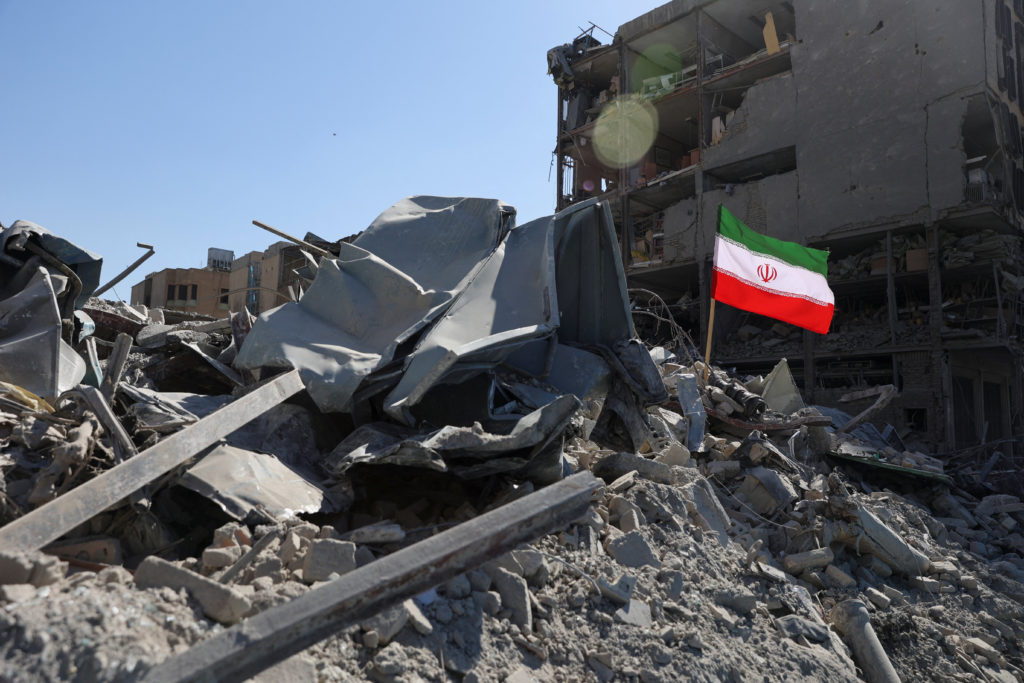
As US-Israeli precision strikes eliminate Iran’s Supreme Leader Ayatollah Khamenei and Tehran responds by mining the Strait of Hormuz, Brent crude has rocketed past $92–98 a barrel — the highest since 2022. For an India that imports 85–90 % of its oil (with 40–55 % still transiting this 21-mile chokepoint), the annual exposure is now racing towards an extra $150–170 billion if the blockade lasts even three months. To the usual critics in Parliament and on television studios, this is proof of “strategic blindness” and “pro-Israel tilt”. To the rational nationalist who understands realpolitik, this is the painful but unavoidable Entry Fee to the most exclusive club on earth: the league of nations that no longer rent their energy security from volatile deserts and narrow straits.
The numbers do not lie. Every $10 sustained rise in crude adds roughly $13–18 billion to India’s import bill. At current spikes, the monthly hit is already in the $4–5 billion range. The Gulf employs nearly 10 million Indians; their remittances ($40+ billion annually) are now at risk. Shipping insurance premiums through the region have doubled. Even basmati exports to Iran and rupee stability are feeling the heat. Yet New Delhi has refused to join any chorus of condemnation. The Ministry of External Affairs’ carefully worded statements speak only of “deep concern”, “maximum restraint”, “dialogue” and “de-escalation” — while quietly activating 24×7 control rooms, evacuation protocols, and naval escort plans for Indian vessels.
"We are not paying for 2.6 million barrels a day of Gulf crude. We are paying to end a 75-year cycle of energy blackmail by volatile chokepoints and unpredictable regimes. The Hormuz oil shock is the 'Bait'; the $50-billion-plus Strategic Petroleum Reserve build-out, Russian crude pivot, Israeli Iron Dome-level tech transfers, and the Atmanirbhar energy & defence push is the 'Whale'."
Indian analysts on X (formerly Twitter) are capturing the national mood in real time. A viral thread by former diplomat and strategic commentator @SushantK_Sinha reads: “India is not neutral — it is pragmatic. We condemned the 7 Oct attack, we maintain ties with Iran via Chabahar, but we will not let 85 % import dependence dictate our foreign policy. Energy security first.” Counter voices from opposition handles scream “betrayal of old friend Iran” and “Modi’s Israel obsession”, with one prominent Congress leader tweeting: “While Gaza burns and Hormuz chokes, PM is silent — this is not strategic autonomy, this is strategic surrender.” Yet the data-driven replies are brutal: Russia has already replaced Saudi Arabia as India’s top supplier in recent months, and the SPR now gives 40–45 days of breathing room — the highest buffer in a decade.
Behind the scenes, the real story is acceleration, not panic. The crisis has turbo-charged three non-negotiable national priorities:
- Energy Diversification: Russian crude discounts (still $10–15 below Brent) are being locked in for the next 18 months. Long-term deals with the US, Brazil and UAE are being fast-tracked.
- Israeli Technology Corridor: The recent elevation of India-Israel ties to “Special Strategic Partnership” is no longer just optics. Joint production of drones, Barak-8 missiles, and even early discussions on Iron Dome-style short-range defence systems for Indian cities and refineries are moving at wartime speed.
- Atmanirbhar Energy Push: Nuclear new-builds (10 reactors in pipeline), green hydrogen missions, and accelerated domestic E&P in the Krishna-Godavari basin have suddenly received Cabinet clearances that were stuck for years.
Chabahar and the International North-South Transport Corridor (INSTC) — India’s $2 billion bet to bypass Pakistan and reach Central Asia — hang in the balance under fresh US secondary sanctions and Iranian retaliation threats. Yet New Delhi has made its red line clear: connectivity projects that serve Indian economic interests will be protected, even if it means quiet diplomacy with all sides. The message to Tehran, Washington and Tel Aviv is identical — India will not become anyone’s pawn, but it will also not sacrifice 1.4 billion citizens’ future for outdated ideological friendships.
This is not neutrality for the sake of neutrality. This is the brutal audit of dependence that every rising power must eventually face. The $150 billion Hormuz ransom stings today — higher fuel prices, possible inflation spike to 6–7 %, pressure on the rupee, and Opposition noise in Parliament. But every invoice contains its redemption clause. When the smoke clears over the Persian Gulf, India will emerge with deeper strategic reserves, diversified suppliers, battle-tested Israeli defence tech flowing into Make-in-India lines, and a national consensus that energy and technological autonomy are no longer desirable — they are non-negotiable.
The Iran-Israel+US war is not asking India to choose between old friends and new partners. It is forcing New Delhi to stop renting its energy and security future from others — and to start owning it. The $150 billion price tag may be steep, but history will record it as the invoice that finally bought India a permanent seat at the high table of resilient, energy-secure superpowers. The ransom is painful. The redemption is priceless.

